









Two firmware platforms. Same hardware. Completely different philosophy.
If you've been following the LoRa mesh community, you've noticed that MeshCore has become a serious alternative to Meshtastic — especially in the Netherlands and across Europe. Both platforms let you send text messages and share GPS positions off-grid, without internet or cellular coverage. And both run on the exact same devices we sell at Hexaspot.
So what's actually different? And which one should you use? This guide breaks it all down — and explains why you don't have to pick just one.
Meshtastic and MeshCore at a Glance
| Meshtastic | MeshCore | |
|---|---|---|
| Routing method | Managed flood — all devices relay | Repeater-based — only repeaters relay |
| Max hops | 7 (configurable) | 64 |
| Self-organising | Yes — just turn on and go | No — requires planned repeater placement |
| Message confirmation | Improving, but can be ambiguous | Clear success/fail with retry count |
| Battery life (handheld) | Good (improved in recent updates) | Better (handhelds don't relay) |
| Community size | Very large — 40,000+ on Discord, global | Smaller but fast-growing, especially in EU |
| Mobile app | Free, open-source (Android + iOS) | Small one-time payment for full features |
| License | GPL (fully open-source) | MIT (some components proprietary) |
| MQTT integration | Built-in | Not available |
| Hardware | RAKwireless, Heltec, LilyGO, etc. | Same — RAKwireless, Heltec, LilyGO, etc. |
| EU868 support | Yes | Yes |
The Core Difference: How Messages Travel
The fundamental difference between Meshtastic and MeshCore is how messages get from A to B. Everything else — battery life, scalability, speed — flows from this one design choice.
Meshtastic: Every Device Relays
In a Meshtastic network, every device is a potential relay. When you send a message, nearby nodes pick it up, check whether they've seen it before, and forward it onward. This is called managed flood routing. Messages can hop through up to 7 devices to reach their destination.
The result: the network is completely self-organising. Grab two WisMesh Pocket V2 devices, turn them on, and you have a working mesh. No infrastructure planning needed. As more people join, coverage automatically improves.
The trade-off: every device relaying means more radio traffic. In dense networks with many nodes, this can lead to congestion and slower message delivery. Meshtastic has improved significantly in recent firmware versions — v2.6 introduced next-hop routing for direct messages, and v2.7 disabled unnecessary telemetry broadcasts by default — but it's inherently chattier than MeshCore.
MeshCore: Only Repeaters Relay
MeshCore separates devices into two distinct roles: Companions (your personal device) and Repeaters (fixed relay infrastructure). Companions do not relay traffic for other users — they only talk directly to nearby companions or to repeaters within range. All long-distance routing goes through repeaters.
The result: dramatically less radio congestion. Your personal device isn't being used as a relay for everyone else's messages. MeshCore networks tend to feel faster and more responsive. Repeaters can also support up to 64 hops (vs Meshtastic's 7), enabling very long relay chains across a region.
The trade-off: the network needs repeaters to function over distance. Two companions out of direct radio range can't communicate unless there's a repeater between them. This means someone has to plan and deploy repeater infrastructure — it doesn't happen organically. The WisMesh Repeater Mini with its built-in solar panel is ideal for this.
Message Delivery Confirmation
One area where MeshCore has a clear advantage is delivery feedback. When you send a message in MeshCore, the app shows you exactly how many transmission attempts were made and whether delivery succeeded or failed. If direct routing doesn't work, the system automatically falls back to flood routing and tells you the result.
Meshtastic's delivery confirmation has historically been less transparent. A checkmark icon appears, but it doesn't always guarantee the recipient received the message — particularly across multiple hops. Recent firmware versions have improved this, but MeshCore's feedback system remains more precise.
For casual use with friends, this difference is minor. For emergency preparedness or professional deployments where you need certainty that your message arrived, it matters.
Battery Life
Because Meshtastic devices relay traffic for other users, they spend more time with their radios active — transmitting, receiving, and deduplicating packets from across the network. This uses more power.
MeshCore companions only activate their radios when they have something to send or when they're addressed directly. No relaying, no processing other people's traffic. The result is noticeably better battery life on handheld devices.
For repeaters (which are always listening and forwarding), power consumption is similar on both platforms. But for the device in your pocket — the one that matters for daily carry — MeshCore has an edge.
That said, the WisMesh Pocket V2 with its 3200 mAh battery comfortably lasts multiple days on either firmware. Battery life becomes more of a consideration on smaller devices like the WisMesh Tag or bare development boards with smaller batteries.
Community and Software
Meshtastic has the larger, more established ecosystem. Over 40,000 members on Discord, extensive documentation, and broad hardware support. The app is completely free and open-source (GPL license) on both Android and iOS. There's built-in MQTT integration for connecting your mesh to home automation or the internet, and a rich ecosystem of third-party tools and sensor support.
MeshCore launched in 2025 and has been growing rapidly, particularly across Europe. The community is smaller but very active, with significant momentum in the Netherlands, UK, and Germany. The mobile app requires a small one-time payment for full features. MeshCore is open-source under the MIT license, though some components (certain device firmwares and the mobile apps) are proprietary.
In the Netherlands, MeshCore adoption has been especially strong. Hundreds of community-deployed repeaters already provide coverage across many areas, and local groups are very active. If you're building a mesh in the Netherlands, there's a good chance a MeshCore network is already within reach.
The Hardware: Identical
This is the best part — you don't need different hardware. Both Meshtastic and MeshCore run on exactly the same devices. Every product at Hexaspot is compatible with both firmwares:
WisMesh Pocket V2 (€99) — Ready-to-use handheld with GPS, display, and 3200 mAh battery. Works beautifully on both platforms. Many of our customers flash MeshCore on these.
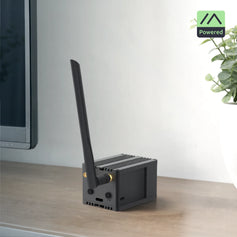
WisMesh Repeater Mini (€107) — Solar-powered, weatherproof, IP67-rated. The go-to device for deploying MeshCore repeaters or Meshtastic router nodes outdoors.
WisBlock Meshtastic Starter Kit (from €27.99) — The RAK4631-based kits are the most popular platform for DIY MeshCore repeaters. Ultra-low power nRF52 chip, reliable, and proven in hundreds of community deployments.
WisMesh Tag (€47) — Compact and efficient. Ideal as a lightweight MeshCore companion or Meshtastic portable node.
Switching between firmwares takes just a few minutes using the respective web-based flashers. No hardware changes, no soldering, no risk — just flash and go.
And antennas are completely firmware-agnostic. Whether you run Meshtastic or MeshCore, a 6 dBi McGill tuned antenna performs identically. The radio layer is the same on both platforms — only the software on top differs. Check out our complete EU868 antenna guide for help choosing the right antenna.
When to Choose Meshtastic
You want a "bring a radio, it just works" experience. Grab two devices from our Meshtastic collection, turn them on, and you're communicating. No infrastructure planning required.
You need MQTT or internet integration. Meshtastic's built-in MQTT module makes it easy to bridge your mesh to the internet, connect to home automation platforms, or link geographically separated networks.
You value fully open-source software. Every component — firmware, mobile apps, documentation — is open-source under the GPL license.
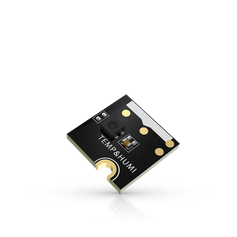
You want rich telemetry and sensors. Meshtastic has more mature support for WisBlock sensor modules (temperature, humidity, barometric pressure) and tactical mapping integration.
When to Choose MeshCore
You're building or joining a repeater-based network. MeshCore is designed for this. With dedicated repeaters at fixed locations, the network is predictable and efficient.
You want reliable message delivery confirmation. MeshCore tells you exactly whether your message arrived, how many retries it took, and whether it fell back to flood routing.
You prioritise battery life on your handheld. Since companions don't relay for others, they last longer between charges.
You're deploying a large-scale network. MeshCore's repeater architecture scales more predictably than Meshtastic's everyone-relays approach — especially in dense urban areas.
Or Choose Both
Many mesh enthusiasts run both platforms. A WisMesh Pocket V2 running Meshtastic for hiking with friends, and a WisBlock Starter Kit running MeshCore as a fixed repeater at home. Same hardware, different firmware, different purpose.
The two networks don't communicate with each other — a Meshtastic device can't talk to a MeshCore device directly. But the hardware investment carries over completely, and you can reflash any device at any time.
Get Started with Either Platform
Whether you choose Meshtastic, MeshCore, or both — every device at Hexaspot supports both platforms out of the box. All RAKwireless devices ship pre-flashed with Meshtastic firmware and can be reflashed to MeshCore in minutes. We ship across the EU and Norway, with same-day dispatch on weekday orders before 14:00.
Browse all compatible devices at Hexaspot →
Not sure which device or firmware is right for your situation? We're happy to help — reach us at support@hexaspot.com or call +31 (0)85 200 6150. We advise on both Meshtastic and MeshCore setups.
Hexaspot is an authorised RAKwireless dealer based in the Netherlands. All devices are EU868 configured and compatible with both Meshtastic and MeshCore firmware. Prices include VAT.
Last updated: March 2026.


