



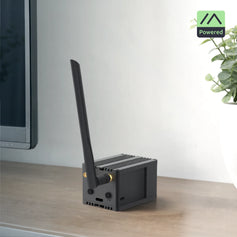


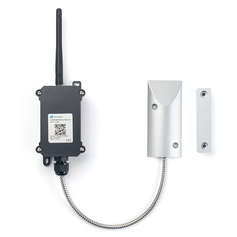


Most IoT hardware forces an early choice: buy a finished device that does one thing, or design your own board and wait weeks for it to be made. WisBlock sits in between. It is RAKwireless's modular system of plug-in boards: you snap together a processor, a base, and the sensors or interfaces you need, and you have a working device the same afternoon. Because it is the same hardware family behind many Meshtastic and LoRaWAN projects, it is also one of the most flexible ways to get started on either.
How WisBlock works
The system is built on a few module types that plug into each other:
- Base boards are the carrier. They provide power (from USB or a battery or solar input) and connect everything else. The smallest base boards are only a few centimetres across, and larger ones offer more slots.
- Core modules are the brain: the microcontroller plus the LoRa radio. Some also bring Bluetooth or Wi-Fi. The popular RAK4631 uses a Nordic nRF52840, while the RAK3312 is built around an ESP32-S3.
- Sensor modules collect data: temperature, humidity, pressure, air quality, motion, GPS and more.
- IO and interface modules connect to the outside world: industrial buses, displays, storage, motors.
A base takes one Core, and then IO and sensor modules depending on the board. You plug modules into their slots and fix them with screws, so there is no soldering. If your needs change, you swap or add a module instead of starting over. Our own background articles on the story behind the modular vision and the RAK naming system explain how the model numbers map to these module families.
What you can build
A Meshtastic or MeshCore node. The fastest route is a starter kit: the WisBlock Meshtastic Starter Kit (RAK4631, from €27,99) or the RAK3312 kit (from €28,75) comes pre-flashed with Meshtastic. The RAK4631 core is known for very low power consumption, which makes it a strong choice for battery and solar nodes. Add a GPS module such as the RAK12501 (€9,89) to turn it into a tracker.
A solar repeater. Pair a WisBlock node with a solar-capable base, a battery, and an outdoor enclosure and you have your own version of a solar repeater. If you would rather buy it finished, the WisMesh Repeater Mini V2 is essentially this idea, built into an IP67 Unify enclosure with a solar panel. Our installation guide covers placement.
An environmental monitoring station. A temperature and humidity module like the RAK1901 (€4,99), the RAK1906 BME680 (€16,29), a barometric pressure sensor, or a VOC air quality sensor (€11,29) can report readings over LoRa. That works for greenhouses, cellars, classrooms, or a weather station on the roof. In Meshtastic you can run such a node on the Sensor role (see our roles guide).
Distance, level, and presence sensing. The ultrasonic (€5,49) and radar (€4,19) modules suit things like measuring fill levels or detecting movement.
Motion and vibration monitoring. Accelerometer modules (RAK1904, €3,99, or the 6-axis RAK12033) can detect movement, tilt, or shocks for asset tracking and equipment monitoring.
Industrial and Modbus data. The RAK5802 RS485 module (€6,49) lets you bridge existing RS485/Modbus equipment onto a LoRaWAN or IoT network, which is a common request from industrial and utility customers.
Teaching and research. Because the modules are inexpensive, open to custom firmware, and need no soldering, WisBlock works well for labs and courses. Institutions can order through the Request a Quote button on every product page, as described in our guide for universities and public organizations.
Making it outdoor-ready
A bare board is a prototype. For a permanent installation you need protection. RAKwireless's Unify enclosures are IP67-rated, flame-retardant ABS housings designed for WisBlock bases, with options for pole, wall, DIN rail and other mounting, and versions with an integrated solar panel. Browse them in our WisBlock enclosure collection. Add a tuned antenna and, on exposed masts, a lightning arrester for a setup that survives the seasons.
Is WisBlock right for you?
Choose WisBlock if you want to tinker, expand later, run on very little power, or build something that no finished product quite covers. Choose a finished device such as the WisMesh Pocket V2 or the Heltec V3 if you want something that works the moment you unbox it. The two are not exclusive: many of our customers start with one starter kit, learn what they need, and then grow the build one module at a time. If you are unsure which core, base, or sensors to combine, contact us and we will help you put the right kit together.


